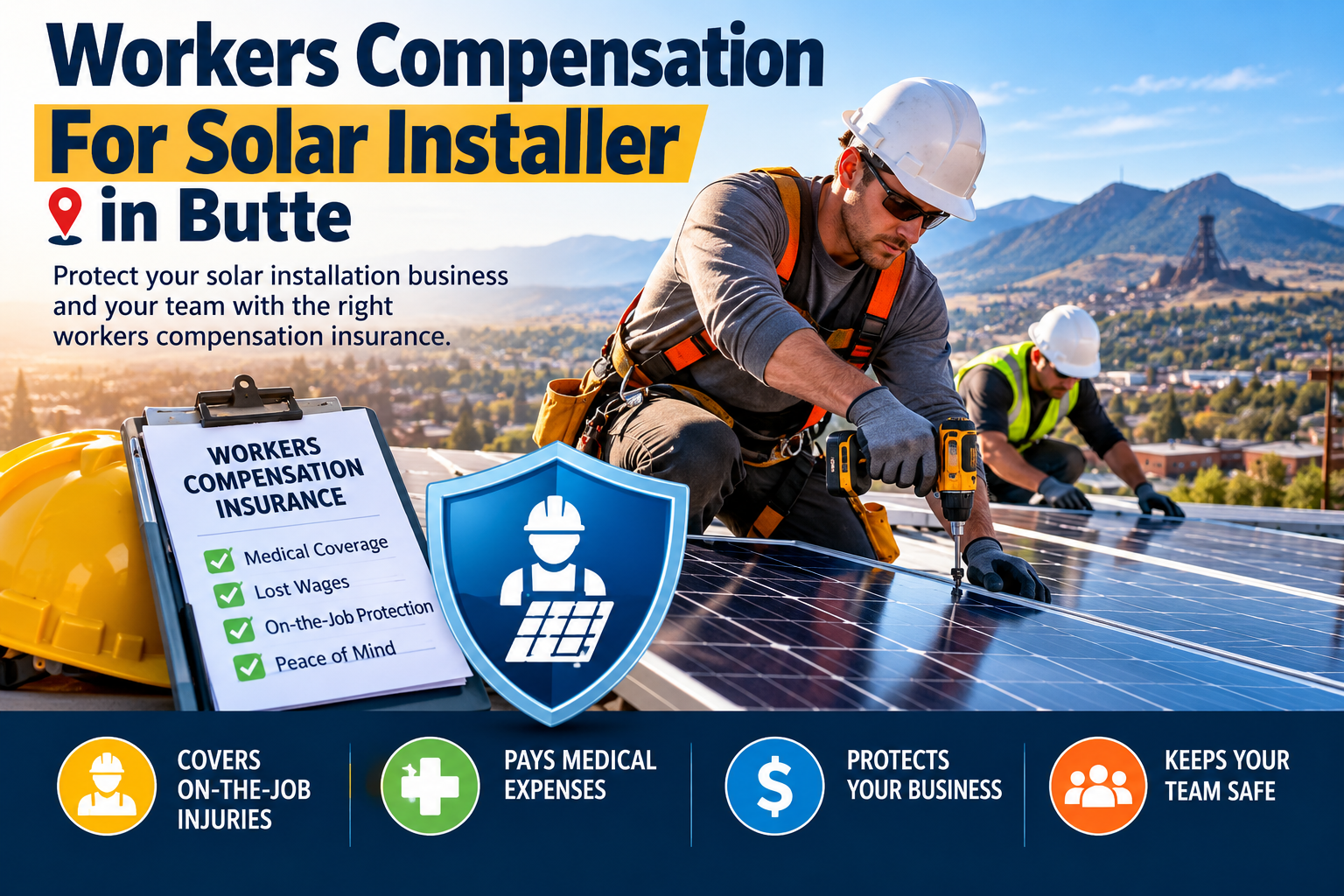
Workers Compensation For Solar Installer in Butte
Solar installation requires employees to perform physical and technical work that can involve ladders, rooftops, solar panels, electrical components, tools, wiring, and outdoor job sites. Depending on the project, workers may also need to lift materials, work at elevated locations, and perform maintenance or repair tasks.
Workers Compensation For Solar Installer in Butte is important for businesses that employ workers for solar installation and related services. Workers compensation can provide benefits for eligible work-related injuries and illnesses, including medical treatment and disability-related benefits under applicable California requirements.
Redvo Insurance Solutions has 15+ years of experience helping businesses with workers compensation insurance needs. If you need to review your coverage or request a quote, contact Redvo Insurance Solutions at 1-800-411-0733.
Why Do Solar Installers in Butte Need Workers Compensation Insurance?
Solar installation can expose employees to several workplace hazards.
An installer may carry panels, climb ladders, work on rooftops, use power tools, connect electrical components, or move equipment around a job site. Each activity can create a different type of workplace risk.
Common risks include:
Falls from roofs or elevated surfaces
Ladder-related injuries
Back and muscle strains
Injuries from lifting solar panels
Cuts from tools or materials
Electrical injuries
Slips and trips
Power-tool injuries
Falling materials
Heat-related illness during outdoor work
Workers compensation insurance provides a way for a business to respond when an eligible employee suffers a work-related injury or illness.
For solar companies, workers compensation should be considered alongside workplace safety. Reducing preventable injuries can protect employees and help reduce unnecessary claims.
Does a Solar Installer in Butte Need Workers Compensation Insurance?
A solar installation company with employees generally needs to comply with California workers compensation requirements.
California requires employers to provide workers compensation coverage for employees, subject to applicable requirements and exceptions. A business should not assume that having a small workforce means workers compensation is unnecessary.
Solar companies should also review their insurance information when their operations change.
For example, a policy review may be appropriate when the business:
Hires additional employees
Increases payroll
Adds solar installation services
Begins repair or maintenance work
Changes employee responsibilities
Takes on different types of projects
Experiences workplace claims
Keeping business information current helps the insurance policy better reflect the company’s actual operations.
What Does Workers Compensation Cover for Solar Installers?
Workers compensation is designed to provide benefits for eligible work-related injuries and illnesses.
Depending on the circumstances, benefits may include:
Medical treatment
Temporary disability benefits
Permanent disability benefits when applicable
Supplemental job displacement benefits when applicable
Return-to-work benefits where applicable
Death benefits for eligible dependents
The benefits available depend on the circumstances of the claim and applicable requirements.
For a solar business, it is important that the workers compensation policy reflects the company’s actual employees, payroll, classifications, and job duties.
Workers Comp Insurance for Solar Installers in Butte
Workers Comp Insurance for Solar Installers in Butte should be based on the actual work performed by the company’s employees.
A solar business may employ:
Solar panel installers
Installation helpers
Electricians
Service technicians
Maintenance workers
Project supervisors
Warehouse employees
Office staff
These positions do not necessarily involve the same workplace exposure.
An installer who works on rooftops and handles panels may face different risks from an employee who works primarily in an office.
Providing accurate information about employee duties helps an insurance provider evaluate the business appropriately.
Why Do Employee Job Duties Matter?
Employee job duties are an important part of workers compensation evaluation.
Solar installers may:
Carry and position solar panels
Climb ladders
Work on elevated surfaces
Use drills and power tools
Handle wiring and electrical components
Install mounting systems
Move equipment and materials
Perform repairs and maintenance
These activities can create different workplace exposures.
California safety requirements also address hazards associated with roofing work, including fall protection, ladders, roof openings, skylights, and other elevated-work risks.
For this reason, a solar business should provide a clear description of what employees actually do instead of using a broad description that does not reflect the company’s daily operations.
What Affects Workers Compensation Cost for Solar Installers?
Workers compensation costs vary from one solar business to another.
Several factors can affect the premium.
Payroll
Payroll is an important factor in workers compensation pricing. Changes in wages or workforce size can affect the amount of coverage the business needs.
Employee Classifications
Employee classifications can affect how the insurer evaluates workplace exposure.
A field installer, electrician, warehouse employee, and office worker may have different job responsibilities.
Claims History
Previous claims can influence how an insurer evaluates a business.
A strong safety program can help reduce preventable workplace injuries and improve the company’s overall claims experience over time.
Type of Solar Services
Installation, electrical work, maintenance, repair, and material handling can involve different workplace risks.
Number of Employees
Hiring additional workers can increase payroll and change the company’s workers compensation needs.
Business Operations
Adding new services or changing the type of projects the business accepts can affect its insurance requirements.
For these reasons, a solar installer should not rely on a generic workers compensation cost estimate.
What Information Is Needed for a Workers Comp Quote?
A solar installation company should provide accurate business information when requesting a quote.
An insurance provider may ask for:
Business name and contact information
Description of solar services
Number of employees
Estimated annual payroll
Employee job duties
Current insurance information
Previous claims history
Types of solar projects
Installation activities
Repair and maintenance services
Recent changes in operations
The business should clearly explain the type of work employees perform.
For example, simply stating that the company provides solar services may not provide enough information to properly evaluate the different duties performed by installers, electricians, technicians, and office staff.
What Happens When a Solar Installer Employee Gets Injured?
A workplace injury should be reported and handled promptly.
The employee should report the injury according to company procedures, and the employer should follow the applicable workers compensation process.
The business should maintain clear information about:
Date and time of the incident
Job-site location
Work being performed
How the injury occurred
Employee involved
When the injury was reported
Actions taken after the incident
California workers compensation claims have specific reporting and handling requirements. Employers should follow the applicable process and work with their claims administrator when an injury occurs.
Prompt reporting can help create a clear record of the incident.
How Can Solar Installers in Butte Reduce Workers Compensation Claims?
Workers compensation provides protection when eligible injuries occur, but preventing injuries should remain a priority.
Provide Job-Specific Safety Training
Employees should understand the hazards connected with their duties, including ladder use, rooftop work, tools, electrical tasks, and material handling.
Use Appropriate Fall Protection
Solar installers may work at elevated locations. Businesses should use appropriate fall-protection equipment and procedures whenever required.
Inspect Tools and Equipment
Ladders, power tools, electrical equipment, lifting equipment, and other tools should be checked regularly.
Damaged equipment should not be used until it has been properly addressed.
Use Safe Lifting Practices
Solar panels and related materials can be awkward or heavy to handle. Employees should use appropriate lifting methods and equipment.
Keep Job Sites Organized
Tools, cables, packaging, and materials should be positioned carefully to reduce unnecessary slips and trips.
Address Outdoor Heat Risks
Solar installation often involves outdoor work. Employers should maintain appropriate heat-illness prevention practices for applicable working conditions.
Common Workers Compensation Mistakes Solar Installers Make
Insurance problems can occur when a solar business does not keep its information current.
Common mistakes include:
Underestimating payroll
Providing inaccurate employee classifications
Failing to report changes in business operations
Not updating employee information
Ignoring new types of solar work
Delaying injury reporting
Treating all employees as having identical workplace exposure
Failing to review the policy as the company grows
These issues can become more common when a business expands quickly.
Regular insurance reviews can help identify information that needs to be updated.
How Should a Solar Installer Review Its Workers Comp Policy?
A solar company should review its workers compensation policy whenever there is a meaningful change in its business.
Ask:
Is the employee count accurate?
Is the payroll information current?
Are employee duties properly classified?
Has the company added new installation services?
Has repair or maintenance work been added?
Are more employees performing rooftop work?
Has the business experienced workplace claims?
Has the company started accepting different types of projects?
A policy that was appropriate when a company was small may need to be reviewed as its workforce and operations grow.
Workers Compensation Insurance for Solar Installers in Butte
Workers Compensation Insurance for Solar Installers in Butte should reflect the actual operations of the solar business.
A company may begin with a small installation team and later add electricians, service technicians, supervisors, warehouse workers, or additional installers.
When that happens, payroll, employee duties, classifications, workplace exposure, and overall insurance needs can change.
Solar companies should therefore avoid choosing coverage based only on price. The lowest premium is not necessarily the best fit if the policy information does not accurately reflect the business.
The better approach is to evaluate coverage according to the company’s actual employees, payroll, job duties, claims history, and services.
How Can Redvo Insurance Solutions Help Solar Installers in Butte?
Redvo Insurance Solutions has 15+ years of experience helping businesses with workers compensation insurance needs.
For a solar installation company, understanding the actual business operations is important. The number of employees, payroll, job duties, classifications, claims history, and type of solar work can all affect insurance needs.
Redvo Insurance Solutions can help solar installers review their workers compensation requirements, discuss coverage options, and work toward finding an insurance solution suited to their business.
If you need Workers Compensation For Solar Installer in Butte, feel free to contact Redvo Insurance Solutions at 1-800-411-0733 or fill out the inquiry form.
Frequently Asked Questions
What is workers compensation for a solar installer?
Workers compensation provides benefits for eligible work-related injuries and illnesses. Solar installers may need coverage because employees can face risks involving roofs, ladders, tools, electrical equipment, lifting, and outdoor work.
Does a solar installer in Butte need workers compensation insurance?
A solar business with employees generally needs to comply with California workers compensation requirements. The business should review its specific situation and maintain the coverage required for its employees.
How much does workers compensation cost for a solar installer?
There is no single price. Payroll, employee classifications, claims history, workforce size, and the type of solar work performed can affect the premium.
Does rooftop solar work create additional workplace risks?
Yes. Rooftop installation can involve fall hazards, ladders, material handling, tools, and electrical work. Businesses should follow applicable workplace safety requirements.
What information is needed for a solar workers comp quote?
A business should provide information about its employees, payroll, job duties, claims history, services, and the type of solar installation work it performs.
Can an injured solar installer receive workers compensation benefits?
An employee with an eligible work-related injury or illness may receive workers compensation benefits under applicable requirements.
Should solar installers review their workers compensation policy regularly?
Yes. Reviews are especially important when a company hires employees, changes payroll, adds services, changes employee duties, or expands its operations.
Conclusion
Solar installation involves physical labor, electrical work, tools, ladders, material handling, and sometimes elevated work. These activities can create workplace risks that need to be managed through proper safety procedures and appropriate workers compensation coverage.
The right Workers Compensation For Solar Installer in Butte coverage can help provide benefits for eligible work-related injuries and give the business a structured way to handle employee injury claims.
Accurate payroll information, proper employee classifications, clear job descriptions, timely injury reporting, employee safety training, and regular policy reviews are all important parts of managing workers compensation.
If you need workers compensation insurance for your solar installation business, contact Redvo Insurance Solutions at 1-800-411-0733 or fill out the inquiry form.