
Trucking Workers Compensation Insurance
Trucking Workers Compensation Insurance Complete Coverage Guide for the Trucking Industry
The trucking industry is the backbone of commerce, moving goods across cities, states, and borders every day. While trucking provides stable employment and economic growth, it also comes with significant risks. Long hours on the road, heavy cargo, vehicle maintenance, and physical strain increase the likelihood of workplace injuries.
Trucking workers’ compensation insurance plays a critical role in protecting drivers, loaders, and support staff when injuries occur. It also safeguards trucking companies from lawsuits, fines, and operational disruptions. Understanding how this coverage works helps trucking businesses stay compliant, protect employees, and manage costs effectively.
What Is Workers’ Compensation Insurance for Trucking?
Workers’ compensation insurance is a state-mandated policy that provides medical care, wage replacement, and disability benefits to employees injured while performing job-related duties. In trucking, this includes injuries sustained while driving, loading or unloading freight, inspecting vehicles, or performing roadside repairs.
Because trucking involves both driving and physical labor, insurers evaluate it as a moderate-to-high-risk industry. Having proper coverage ensures injured workers receive timely care while employers avoid costly legal exposure.
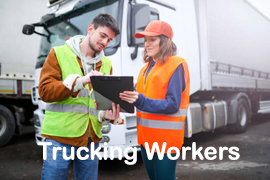
Why Trucking Is a High-Risk Industry
Truck drivers and trucking employees face hazards that many other industries do not.
Common risk factors include:
- Long driving hours and fatigue
- Motor vehicle accident
- Heavy lifting and cargo handling
- Slips and falls during loading or unloading
- Repetitive stress injuries
- Exposure to extreme weather conditions
Due to these risks, insurers closely assess safety programs, driver records, and claims history when underwriting policies.
Common Injuries Covered in the Trucking Industry
Workers’ compensation insurance covers a wide range of trucking-related injuries.
Typical claims include:
- Back, neck, and shoulder injuries
- Slip-and-fall injuries at docks or warehouses
- Injuries from vehicle accidents
- Repetitive motion injuries
- Strains from securing or unloading cargo
Medical expenses and recovery time can be significant, making insurance essential for business continuity.
How Trucking Workers Comp Quotes Are Determined
Insurance premiums vary widely based on risk exposure, payroll, and claims history. Obtaining accurate Trucking workers comp quotes allows trucking companies to compare pricing and coverage options effectively.
These quotes are influenced by:
- Driver classifications
- Type of freight hauled
- Distance traveled
- Claims history
- Safety programs
Reviewing updated Trucking workers comp quotes annually ensures coverage remains accurate as fleets grow or operations change.
Understanding Trucking Insurance with Workers’ Compensation
Many trucking businesses carry multiple insurance policies. Trucking insurance with workers comp combines employee injury protection with other essential coverages, such as auto liability and cargo insurance.
This approach simplifies policy management and ensures there are no coverage gaps. For fleets and owner-operators with employees, Trucking insurance with workers comp provides comprehensive protection across daily operations.
What Affects Workers’ Compensation Rates in Trucking?
Workers’ compensation rates in trucking are influenced by several variables.
Key factors include:
- Number of drivers and employees
- Payroll amounts
- Driving records
- Claims frequency
- Safety and training programs
Can You Find Affordable Workers’ Compensation for Trucking?
Despite the risks, affordable options are available. Many insurers offer Cheap workers comp for trucking companies that demonstrate strong safety records and effective risk management.
Cost-saving strategies include:
- Implementing driver safety programs
- Reducing accident frequency
- Using return-to-work programs
- Maintaining accurate payroll reporting
With the right approach, Cheap workers comp for trucking can provide reliable protection without compromising coverage quality.
Independent Contractors vs Employees in Trucking
Worker classification is a common issue in the trucking industry. Many drivers are classified as independent contractors, while others are employees. Misclassification can result in denied claims, fines, and legal disputes.
Employees must be covered under workers’ compensation policies, while true independent contractors typically are not. Proper classification ensures compliance and avoids costly penalties.
Reducing Workers’ Compensation Claims in Trucking
While accidents cannot be eliminated entirely, many claims are preventable.
Effective strategies include:
- Driver safety and fatigue management training
- Proper lifting and cargo-handling education
- Routine vehicle inspections
- Clear injury reporting procedures
- Early return-to-work programs
Lower claim frequency improves employee safety and long-term insurance costs.














Choosing the Best Workers’ Compensation Coverage
Selecting the right provider is critical in a high-risk industry like trucking. The Best workers comp for trucking companies is offered by insurers experienced in transportation risks and regulatory requirements.
A strong policy includes
- Accurate job classification
- Responsive claims handling
- Flexible payroll reporting
- Industry-specific risk management support
Working with providers that specialize in transportation helps ensure compliance and smoother claims resolution. Choosing the Best workers comp for trucking companies can significantly improve financial stability.
Legal and Business Benefits of Proper Coverage
Workers’ compensation insurance offers benefits beyond legal compliance.
Key advantages include:
- Reduced lawsuit exposure
- Predictable injury-related costs
- Improved employee trust and retention
- Enhanced credibility with shippers and brokers
Many contracts require proof of workers’ compensation coverage before work begins.
By comparing quotes, investing in safety, and choosing experienced insurers, trucking companies can secure long-term protection and stability in a demanding industry.
Frequently Asked Questions
Is workers’ compensation required for trucking companies?
Yes, most states require coverage for trucking businesses with employees.
Are truck drivers covered if injured while driving?
Yes, injuries sustained during job duties are typically covered.
Do owner-operators need workers’ compensation?
Only if they have employees or are required by state law or contracts.
Can trucking companies lower workers’ compensation costs?
Yes, through safety programs, fewer claims, and proper training.
Are loading and unloading injuries covered?
Yes, if the injury occurs during work-related activities.
What happens if a company doesn’t carry coverage?
Penalties may include fines, lawsuits, and business suspension.
Are part-time trucking employees covered?
Yes, part-time employees are generally covered.
Does workers’ compensation cover repetitive stress injuries?
Yes, if the injury is work-related and properly documented.